December 09, 2020
Intervista a Claudio Quarra Sacco
For THE WAY OF SUCCESS column , we meet Claudio Quarra Rigger in Axis Studios and former student of the 3D Digital Production Course.
Hi Claudio,
it's really a pleasure that you agreed to share your experience with all of our students. Let's start this interview by making a brief introduction by saying that you were one of the youngest to have attended the master's program, so your passion for computer graphics started very early didn't it?
Si esatto, la mia passione per la computer grafica è iniziata pochi anni prima che cominciassi il corso di 3D Digital Production, si parla all’incirca di quando avevo 21 anni. Dopo aver scoperto come funziona il mondo del 3D grazie alla mia permanenza in Rainbow Academy, l’interesse è notevolmente salito.
Your career started with full cg animation in Rainbow CGI, how was the transition to Videogames?
I can say that I am very happy, having had a great passion for video games since childhood, this transition has helped me to appreciate more the pleasure for my work.
What do you think are the main differences between the two industries?
I would say the biggest difference is the type of project you go to work on. Axis is expanding its scope of work and has the ability to get commissioned big jobs from clients from all over the world, so it can work on cinematics as well as TV series, Movies, real-time Games etc.
Many people are not aware of the specialty in Rigging, what specifically does a rigger do? Are there differences between a rig for a full cg asset and one for video games?
The Rigger's main task is to create a skeletal structure of a model that can be a human, an animal, a vehicle, or any object. This gives the model those functions (controls, muscles, tools) that later allow the animator to move it. The most important difference between full CG assets and videogames is that, for example, in CG the rigs are very heavy and require many skills to help the animator as much as possible, while in videogames we work on rigs of simpler quality, but always trying to confer the necessary functions without, however, making it too heavy or limiting performance.
What do you think is the difficulty most frequently encountered by a department like yours and the differences, if any, with other departments?
The main difficulties are similar to those in other departments: for example, one must be very cautious in using time to complete assigned tasks in the given time, and also there must always be good communication between departments that in the workflow come before and after rigging.
In your opinion, what characteristics does a Rigger need to have, artistically and technically?
The most important thing about a rigger from a technical (and also partly artistic) point of view is precision and an aptitude for problem solving. In the rigging department, knowledge is also required of the artistic side (not only anatomical), of deformations, such as muscular or facial ones. Certainly, however, the technical side is what prevails most in this department. So for example having good problem solving skills is a prerequisite to arrive at effective solutions in the most difficult situations.
Do you have a particular artist you are inspired by in style or technique?
I honestly don't have any artists I'm particularly inspired by, but you can find a lot of super capable people on the Internet who will always help you learn something new.
What are the latest projects you've worked on and which of them has left you with the fondest memories and/or the greatest satisfaction as an artist?
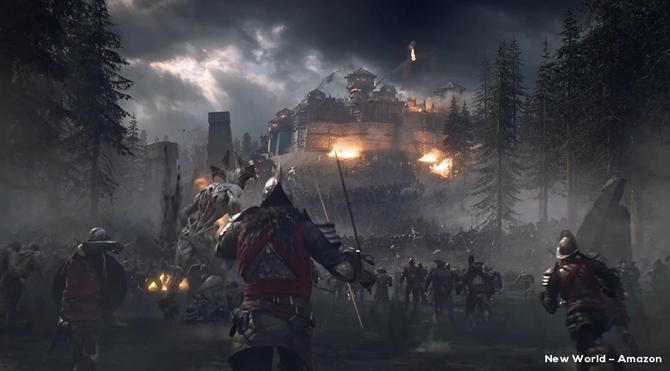
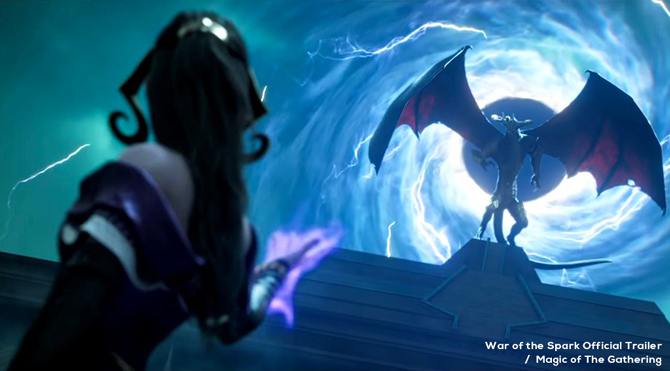
The latest projects I worked on and really enjoyed are these cinematics:
"New World" - Trailer for Amazon's first game,
"War of the Spark Official Trailer - Magic of The Gathering" - Trailer for expansion of the Magic card game,
"Tales of Runeterra: Demacia | "Before Glory" " - First episode of a series of shorts for Riot Games,
"DEATHLOOP" - Trailer for a new video game in the Arkane Studios/Bethesda Softworks house.
What are some projects you are working on (if you can name them) or upcoming goals you would like to achieve?
Definitely my next goal is to participate in even more important projects continue to learn and improve more and more!
If you could send a message to all those young people who would like to approach this profession, what would you recommend and what would you not recommend?
For all the boys and girls who are planning to pursue this career, I can tell you that this job requires a lot of perseverance and great passion, Rainbow Academy's course allows you to receive and understand the whole basis and workflow on which a 3D company is based. If you have the opportunity to work on a movie, TV series or game that you can then share with other people, you would be very proud!
Ringraziamo Claudio Quarra per questa bellissima intervista!